Category Archives: indexes

A Focus on the Trends in Stocks, Bonds and Gold

In the end it is not so much about “predicting” what will happen next in the financial markets, but rather recognizing – and being prepared for – the potential risks, that makes the most difference in the long run.  So let’s start by looking at current trends.
Stocks
Let’s start with a most simple trend-following model that works like this:
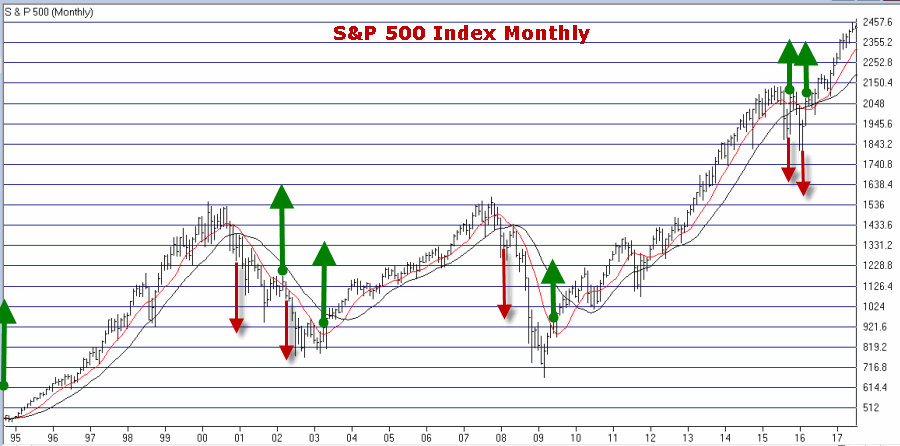
-A sell signal occurs when the S&P 500 Index (SPX) registers two consecutive monthly closes below its 21-month moving average
-After a sell signal, a buy signal occurs when SPX register a single monthly close above its 10-month moving average.
Figure 1 displays recent activity.
1
Figure 1 – SPX Trend-Following signals (Courtesy AIQ TradingExpert)
The good news is that this model does a good job of being out of stocks during long bear markets (1973-74, 2000-2002, 2008-2009).  The bad news is that – like any trend-following model – it gets “whipsawed” from time to time.  In fact the two most recent signals resulted in missing out on the October 2015 and March 2016 rallies.
But note the use of the phrase “simple trend-following model” and the lack of phrases such as “precision market timing” and “you can’t lose trading the stock market”, etc.
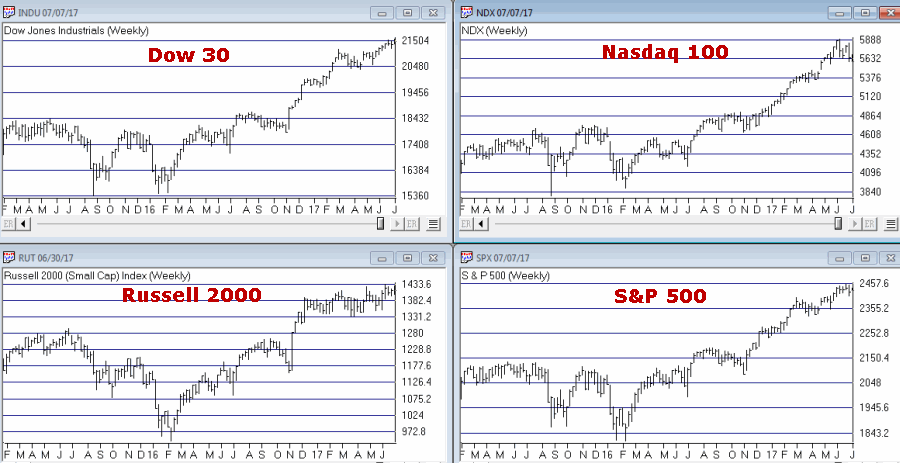
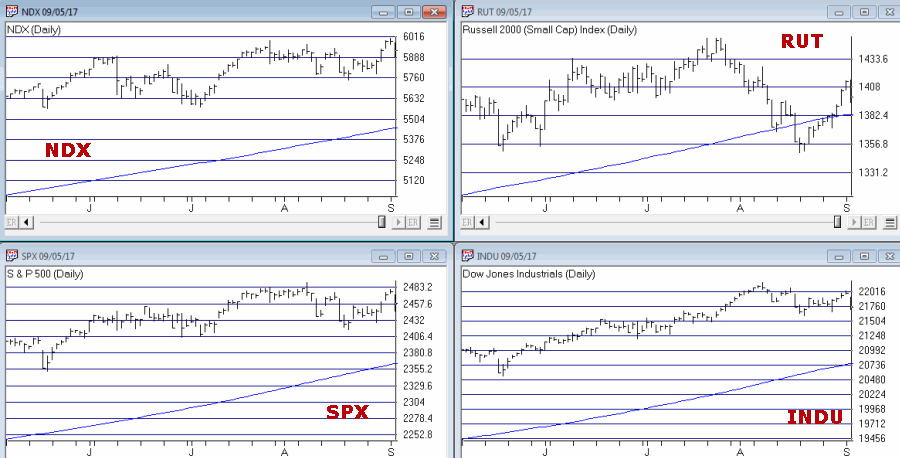
For now the trend is up.  A few things to keep an eye on appear in Figures 2 and 3.  Figure 2 displays four major averages.  Keep an eye to see if these averages break out to the upside (see here) or if they move sideways to lower.
2Figure 2 – Four Major Market Averages (Courtesy AIQ TradingExpert)
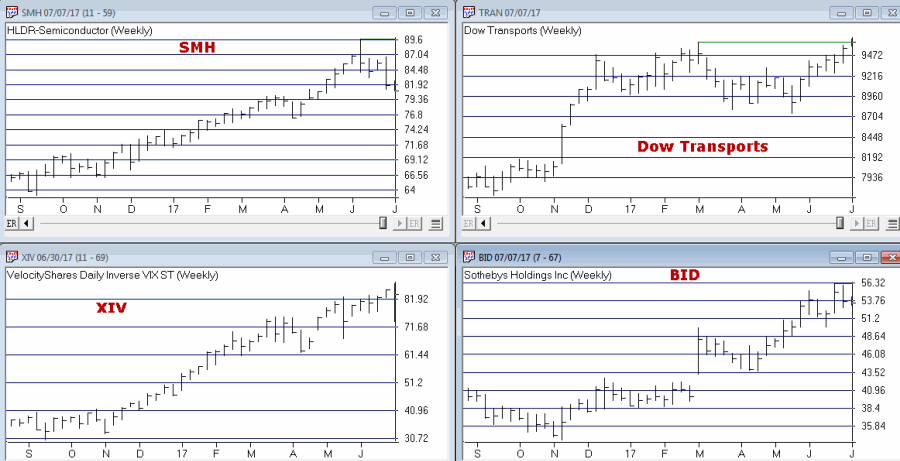
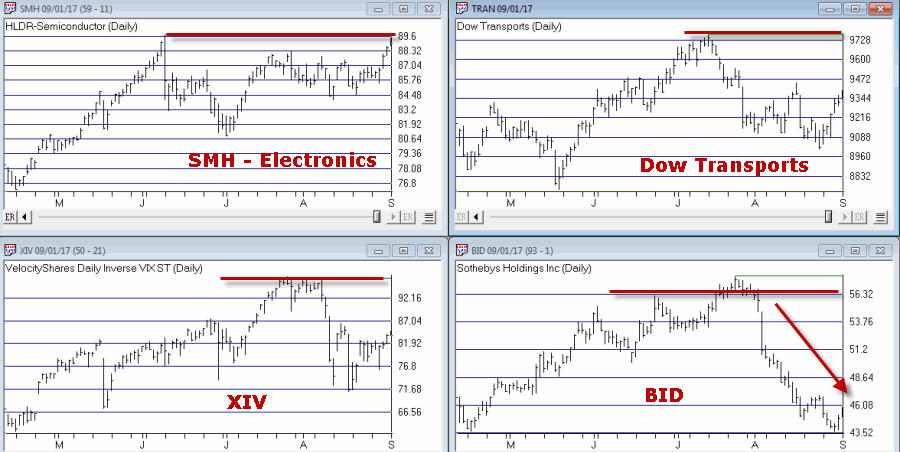
In addition, I suggest following the 4 tickers in Figure 3 for potential “early warnings” – i.e., if the major averages hit new highs that are not confirmed by the majority of the tickers in Figure 3.3
Figure 3 – Four potential “Early Warning” tickers  (Courtesy AIQ TradingExpert)
Bonds
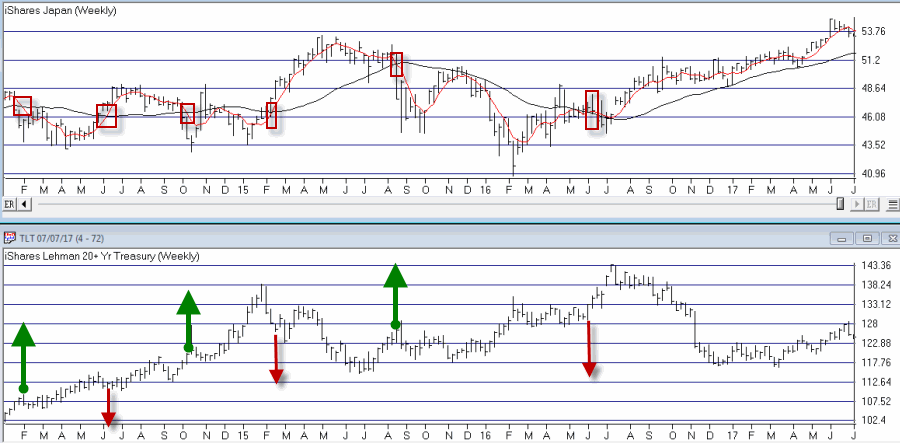
My main “simple bond trend-following model” remains bearish.  As you can see in Figure 4, a buy signal for bonds occurs when the 5-week moving average for ticker EWJ (Japanese stocks) drops below its 30-week moving average and vice versa.
4
Figure 4 – Ticker EWJ 5-week and 30-week moving average versus ticker TLT (Courtesy AIQ TradingExpert)
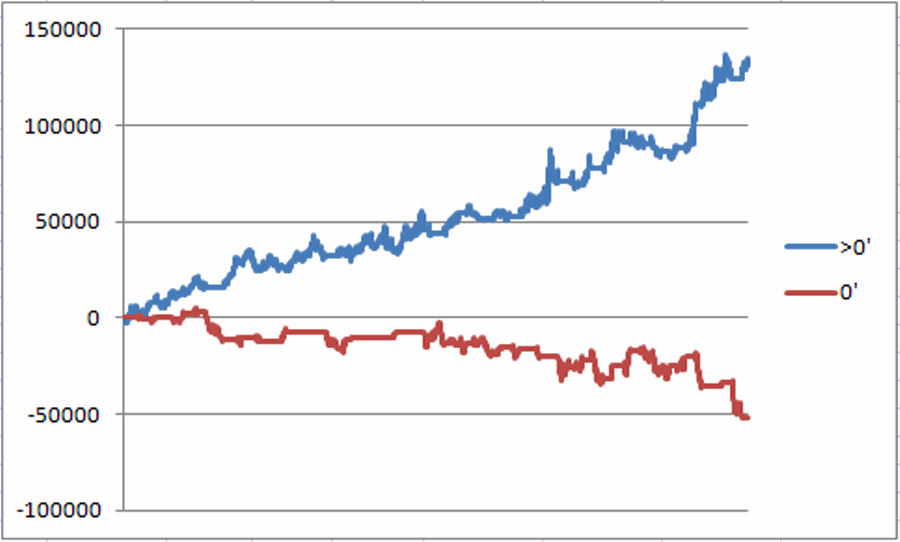
A 2nd model using metals to trade bonds has been bullish of late but is close to dropping back into bearish territory.  Figure 5 displays the P/L from holding a long position of 1 t-bond futures contract ONLY when both the EWJ AND Metals models are bearish (red line) versus when EITHER model is bullish (blue line)
5
Figure 5 – T-bond futures $ gain/loss when EWJ OR Metals Models are Bullish (blue line) versus when EWJ AND Metals Models are both Bearish (red line); August 1990-present
Gold
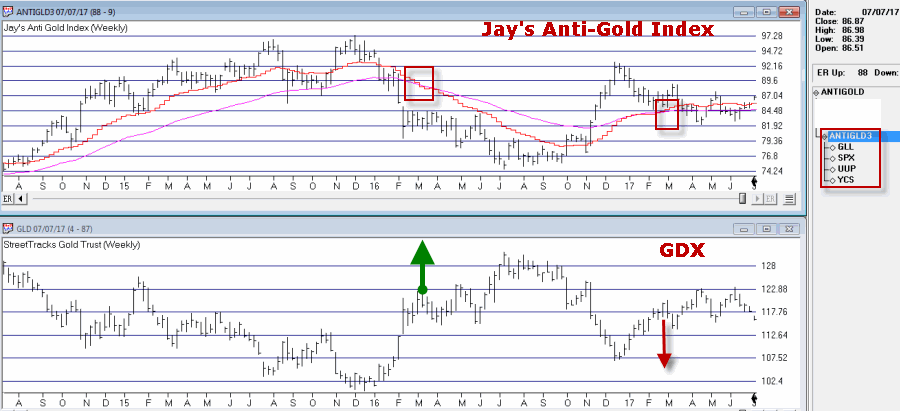
My most basic gold trend-following model is still bearish.  This model uses my “Anti-Gold Index” (comprised of tickers GLL, SPX, UUP and YCS).  It is bullish for gold when a Front-Weighted Moving Average (detailed here) is below the 55-week exponential moving average and vice versa.
6
Figure 6 – Jay’s “Anti-Gold Index” versus ticker GLD (Courtesy AIQ TradingExpert)
Summary
So at the moment the stock model is bullish and the bond and gold models are bearish.  Are these trends certain to persist ad infinitum into the future?  Definitely not.  Will the models detailed here provide timely signals regarding when to get in or out the next time around?  Sorry, but it doesn’t always work that way with trend-following.
But as for me I prefer “riding the trend” to “predicting the future.”
Some painful lessons just stick with you I guess.
Jay Kaeppel  Chief Market Analyst at JayOnTheMarkets.com and AIQ TradingExpert Pro (http://www.aiqsystems.com) client. 
Disclaimer:  The data presented herein were obtained from various third-party sources.  While I believe the data to be reliable, no representation is made as to, and no responsibility, warranty or liability is accepted for the accuracy or completeness of such information.  The information, opinions and ideas expressed herein are for informational and educational purposes only and do not constitute and should not be construed as investment advice, an advertisement or offering of investment advisory services, or an offer to sell or a solicitation to buy any security.
Four Things to Watch for Warning Signs

First things first: I am primarily a trend-follower (this is based on, a) the relative long-term benefits of following trends and b) my lack of ability to actually “predict” anything – but I digress).
As a trend-follower I love the fact that the stock market has been trending higher and the fact that there is so much “angst” regarding the “inevitable top.”  Still, like a lot of investors I try to spot “early warning signs” whenever possible.  Here are the four “things” I am following now for signs of trouble.
Fidelity Select Electronics
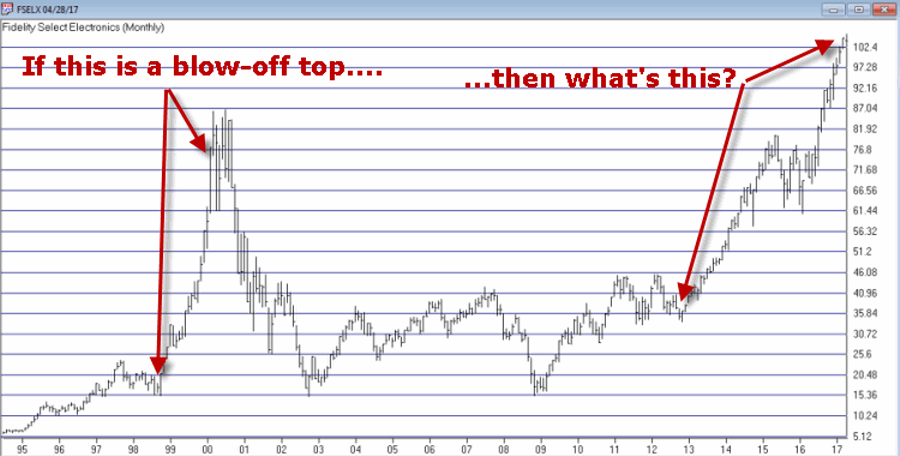
In Figure 1 you see, a) the blow-off top of 1999-2000 and b) today.  Are the two the same?  I guess only time will tell.  But the point is, I can’t help but think that if and when the bloom comes off of the electronics boom, overall trouble will follow.  Here is hoping that I am not as correct here as I was here.
1
Figure 1 – Ticker FSELX (Courtesy AIQ TradingExpert)
Just asking.
Transportation Index
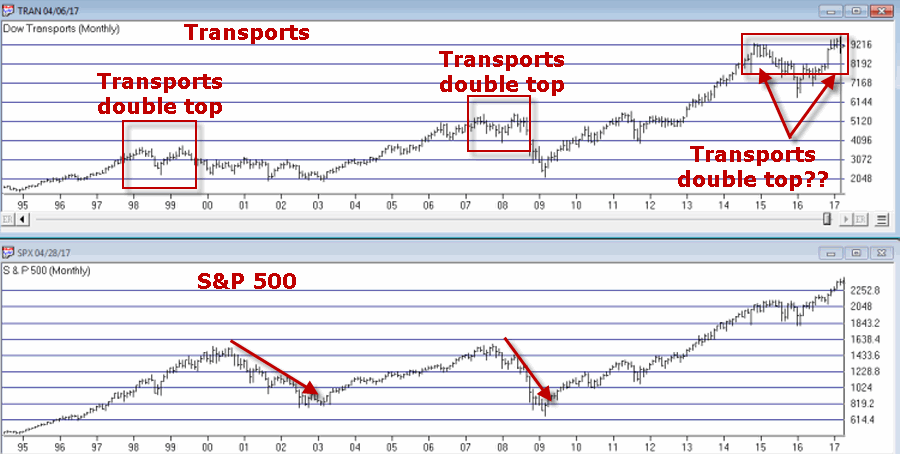
As you can see in Figure 2, the Dow Transports has a history of making double tops which is followed by trouble in the broader market.  Are we in the process of building another double top?  And will trouble follow if we are?  Dunno, hence the reason it is on my “Watch List” rather than on my “OH MY GOD SELL EVERYTHING NOW!!!!! List”.
2
Figure 2 – Dow Transportation Index (Courtesy AIQ TradingExpert)
I guess we’ll just have to wait and see.
Ticker XIV
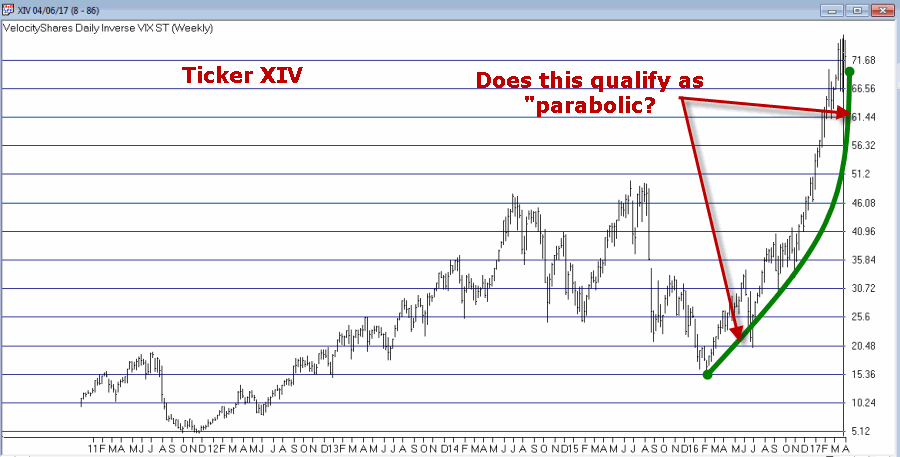
Ticker XIV is an ETF that is designed to track inverse the VIX Index. As a refresher, the VIX Index tends to “spike” higher when stocks fall sharply and to decline when stocks are rising and/or relatively quiet.  To put it in simpler terms, in a bull market ticker XIV will rise.  As you can see in Figure 3 one might argue that XIV has gone “parabolic”.  This is a potential warning sign (assuming you agree that the move is parabolic) as a parabolic price move for just about anything is almost invariably followed by, well, let’s just say, “not so pretty”.
3
Figure 3 – Ticker XIV (Courtesy AIQ TradingExpert)
Let’s hope not.  Because if it does qualify as  parabolic that’s a very bad sign.
Ticker BID
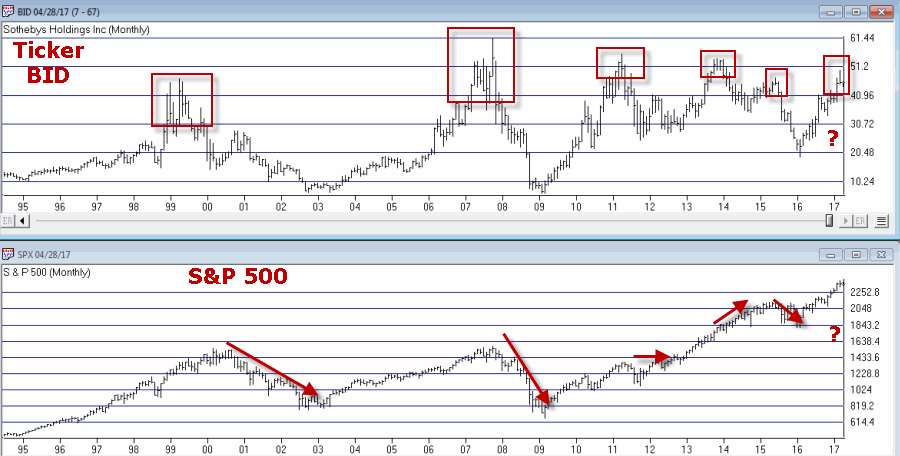
This one may or may not be relevant but for what it is worth, Sotheby’s (ticker BID) has on several occasions served as something of a “leading indicator” at stock market tops (for the record it has also given some false signals, so this one is more for perspective purposes rather than actual trading purposes). Still, if this one tops out in conjunction with any or all of the above, it would likely serve as a useful warning sign.
4
Figure 4 – Ticker BID (Courtesy AIQ TradingExpert)
Summary
There is no “urgent action” to be taken based on any of this.  Bottom line: Nothing in this article should trigger you to run for the exits.
Still, it might be wise to at least take a look around and “locate the exit nearest you.”
You know, just in case.
Chief Market Analyst at JayOnTheMarkets.com and AIQ TradingExpert Pro (Courtesy AIQ TradingExpert) client. http://jayonthemarkets.com/
Disclaimer:  The data presented herein were obtained from various third-party sources.  While I believe the data to be reliable, no representation is made as to, and no responsibility, warranty or liability is accepted for the accuracy or completeness of such information.  The information, opinions and ideas expressed herein are for informational and educational purposes only and do not constitute and should not be construed as investment advice, an advertisement or offering of investment advisory services, or an offer to sell or a solicitation to buy any security.
AIQ Market Timing signals a sell

The AIQ TradingExpert Pro Market Timing Expert System uses over 400 rules based on numerous technical indicator conditions to determine if a change in the current trend is imminent. The signals can be quite early and confirmation from other indicators not used in the AI system, like Phase are recommended. Quick disclaimer, we are not advisors and do not give recommendations.

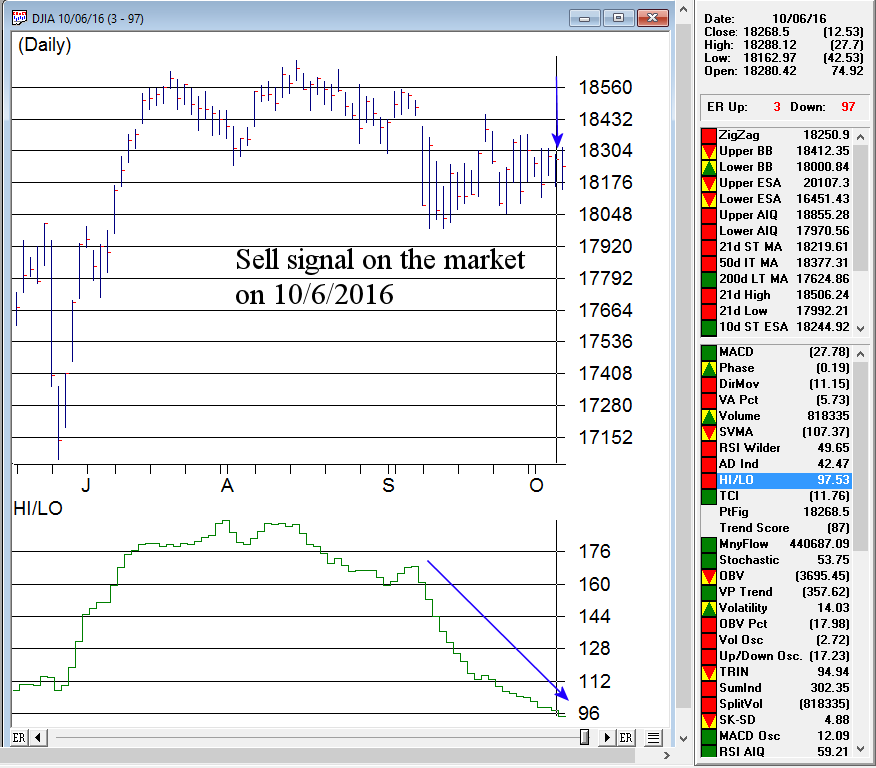
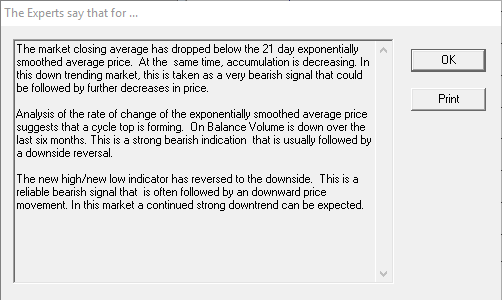
Here’s the signal from last week. The number of stocks with new highs vs new lows is clearly showing a persistent down trend, while the market has been flat.

By clicking the ER button in Charts we can see some of the major rules that have fired to generate the signal

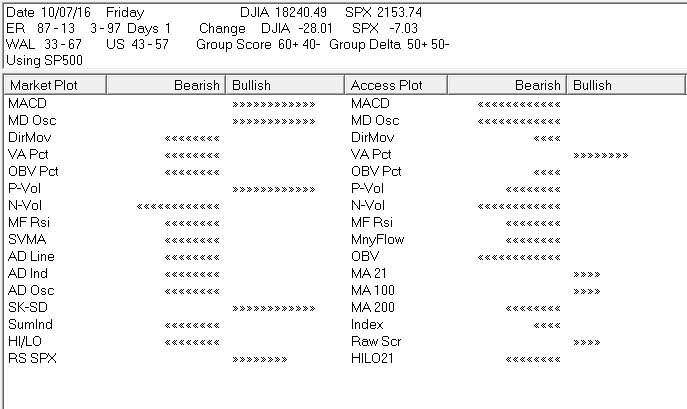
The AIQ market Log in Reports  provides additional information that gives us some broader information on the market. here we can see how a broad range of indicators on the market are fairing and also the percentage of buy vs sell signals on stocks in the S & P 500 (Unconfirmed signals 43-57, confirmed signals 33-67) .
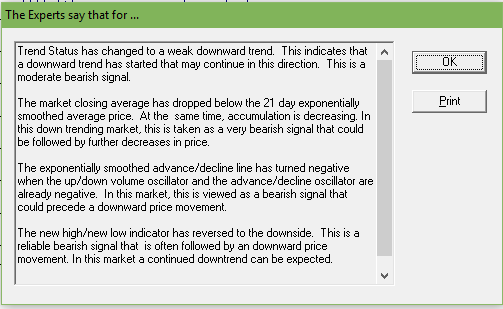
The market action from Tuesday generated a second down signal of 2-98, following the 200 point fall in the Dow. The major rules that fired this time are below.
While never perfect, we always take heed when this many rules are firing

It’s all relative you see

The markets have been shall we say been less than inspiring recently. Brexit came and went with a brief hiccup in the action and only in the last week or so has the volatility picked up. The Dow as you can see in this weekly chart is back the same level as December 2014


The VXX shows clearly the decline in volatility since the high back in 2011


The summer doldrums may be over, but during periods when the market is range bound, segments within the market are often performing very well or very poorly. One AIQ Report that can show the strength within segments is the Relative Strength Strong – Short Term. This report shows stocks in 3 month trend up and is a great report for those who trade with ‘the trend is your friend’. Here is Friday 9-16-2016 report. The report is ranked by the stocks with the best trend.


I highlighted 6 stocks in the top of this report. All have good trends in place, and all in the Oil and Exploration S&P 500 group. The group has performed quite well recently. The top 2 OILEXPO stocks CHK and DVN have both had a small pullback to their uptrend line. We’ll see how they do this week.


Inverse Head and Shoulders on the market?

There was an interesting Inverse Head and Shoulders pattern completed last night on SPY. As SPY is the proxy ETF for the S&P500 index, it caught my attention. A closer look at the Chart attached shows this pattern usually breaks out to the upside.
Analysis of the supplementary information clearly shows that the uniformity of this inverse head and shoulders is good, however the overall quality of the pattern is only average. The biggest issue is the lack of volume and lack of power of the breakout. The volume is particularly low. More volume is needed before this pattern is confirmed, particularly on a strong up day.

Learn more about Chart Pattern Recognition for TradingExpert Pro  http://aiqsystems.com/chartpatterns.htm